Kok Thnoat village is about a 30-minute drive away from
central Siem Reap. Past the airport and the ancient temple ruins of Bayon, the
road leading up to the village is a small pot-holed dirt path, and becomes
narrower until no four-wheeled vehicle can pass. The rest of the journey has to
be done either on foot or on a bicycle.
 |
Children swing in a hammock. They
belong to one of the few families
who will benefit from the fresh water
supply. |
 |
Four year old SreySa (left) and her sister
Srey Chit, 6,sit on the steps of their home. |
|
On one of our recent visits, a new well was being dug. When
finished in a couple of days, this well will be a safe and reliable supply of
drinking water shared between four families. Other areas have also been
earmarked for new wells, and it is our hope that every family will have their
very own water source one day.
 |
A construction worker digs a well with basic
tools. A typical well is between 25 and 30
metres deep and can take up to a week
to complete |
|
 |
A family holds up a well
sign. They will finally
have fresh water indoors
when the pump is ready. |
The entire village used to share a derelict public well until
some families decided to dig their own in their backyard. At 3m deep, these are
unfortunately no more than muddy ditches that breed micro-organisms and algae.
They are also a potential drowning hazard for small children.
It gets worse during the rainy season between September and
November, when the whole village goes underwater, temporarily suspending all
access to drinking water. At one home visit, workers were putting the finishing
touches to a new water pump. When completed, it will be connected directly to
the house so that the family will have a constant supply of fresh water even
during the rainy season.
 |
Longbean, morning glory and
pumpkin seeds being distributed. |
Once in a while, when we go around the surrounding villages
to see how people are doing, we also
 |
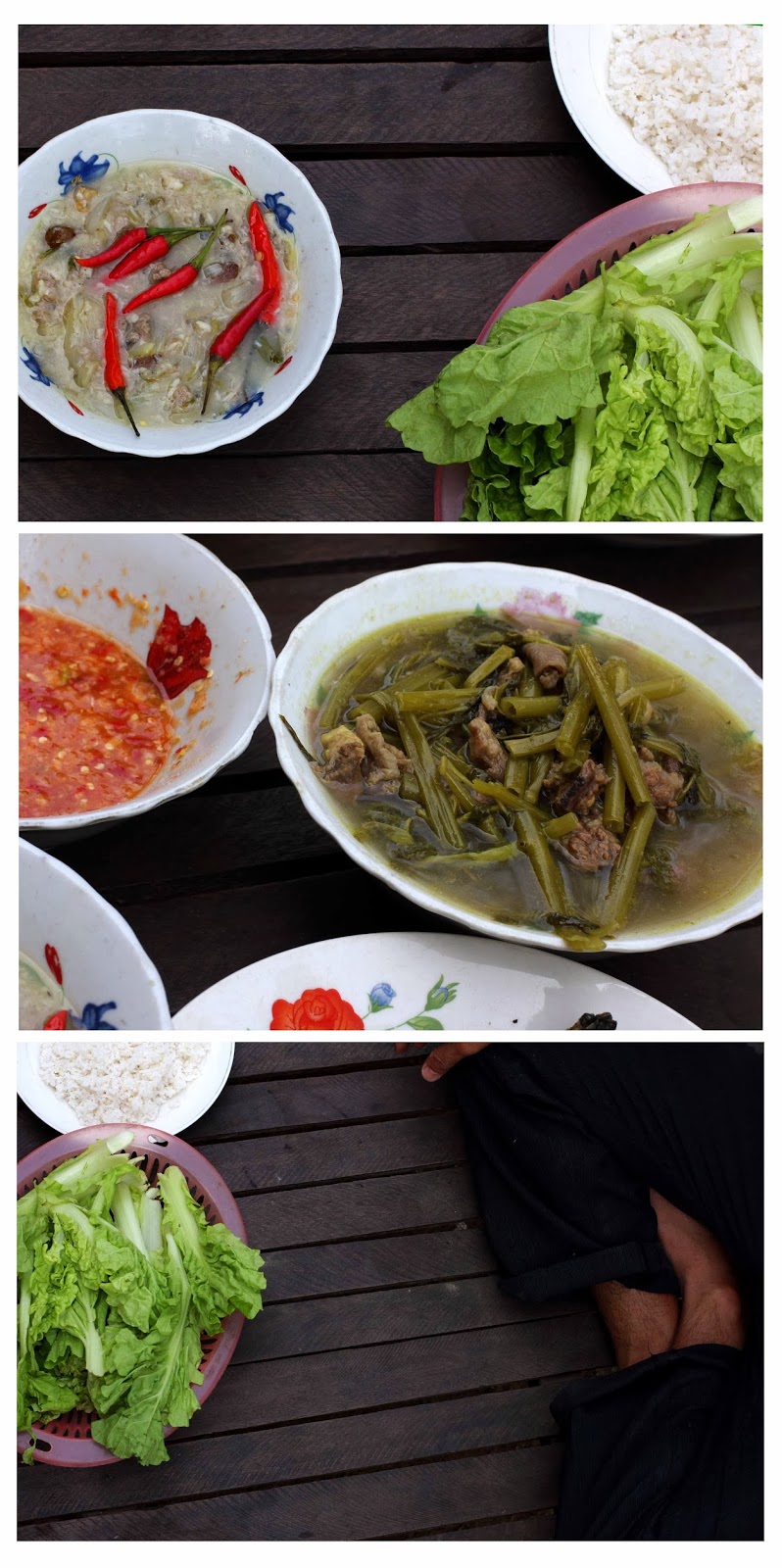
Lunch from above! Stir fried
tamarind and cabbage, beef
with morning glory and fresh
lettuce leaves |
distribute vegetable seeds to help
families make a sustainable livelihood.
Life here is simple and basic—most men
work in the town, while their wives look after the home, and children go to a
nearby school. But it can sometimes get financially very difficult when the
only breadwinner of the family becomes unemployed.
For others, their only asset
is the house they live in, built by their ancestors and passed down through the
generations. There is also no electricity in the village. Despite busloads of
tourists who visit Angkor Wat every year, local incomes and standards of living
have not gone up. As a result, Siem Reap continues to remain one of the poorest
provinces in Cambodia.
Beyond the poverty of rural Siem Reap, lies beauty
in the form of a welcoming smile and a kind word for the visitor. Sometimes a
meal is also generously provided, as it was for us as we happened to be there
during lunchtime. This warm hospitality is definitely one of the best
experiences in life.
Do visit our
donations page, if you
would like to make a contribution for a new well. Full-day village tours are
also available
here. All proceeds from the tour goes
towards FKC.
 |
It costs $300 for a well and here FKC
staff show the sign that will placed
at the site |